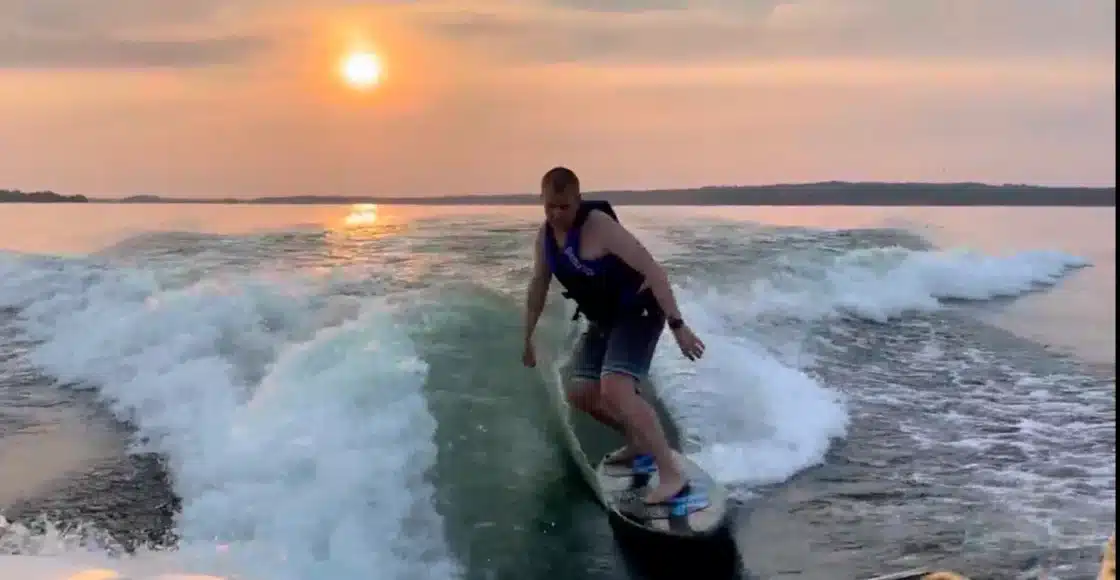
Lake of the Ozarks offers 54,000 acres of protected coves and calm water — ideal conditions for learning to wakesurf or honing your skills. Whether you’re a complete beginner or an experienced rider looking for your next adventure, this Missouri destination delivers consistent waves and rental options that make the sport accessible from late spring through fall.
Key Takeaways
- Lake of the Ozarks’ 1,150-mile shoreline creates hundreds of sheltered coves that block wind chop, giving you cleaner, more predictable wakes than most inland lakes.
- Wakesurfing requires dropping the rope and riding hands-free at 10–12 mph, making it gentler for beginners than wakeboarding’s rope-dependent, 18–24 mph intensity.
- Missouri law requires a spotter watching you continuously and a Coast Guard-approved Type III PFD worn at all times, regardless of your skill level.
- Most beginners get to their feet within 20–30 minutes by letting the boat’s rope tension bring them to a crouch, then gradually straightening legs as the board planes.
- Early mornings before 10 a.m. and weekday sessions produce the flattest water; upper lake arms like Gravois and Niangua stay calmer than the main channel.
- Renting through Boatsetter connects you with local owners who often captain their own wake-specific boats, providing real-time coaching and ballast adjustment for your skill level.
Why Lake of the Ozarks is perfect for wakesurfing
Most inland lakes force you to choose between calm water and enough space to ride. Lake of the Ozarks gives you both. Its 1,150-mile shoreline — longer than California’s Pacific coast — creates hundreds of sheltered coves that block wind chop and boat traffic, so you get a cleaner, more predictable wake on your first attempt and your fiftieth.
A few specific advantages set it apart from other Missouri watersports destinations:
- Protected coves everywhere. The lake’s branching shape means you’re almost always within a few minutes of a quiet arm where you can set up a consistent run without fighting open-water swells.
- No tidal influence. Unlike coastal destinations, the water level stays predictable. The wake you shape in the morning looks the same in the afternoon.
- Established boating infrastructure. Marinas, fuel docks, and launch ramps are distributed across the lake, so you’re never far from help if something goes sideways.
- Boat traffic patterns that work in your favor. The main channel gets busy on summer weekends, but the upper arms stay calm. Experienced local boat owners know exactly where to go for flat water.
The lake’s depth — averaging around 30 feet in the main channel — also matters for wakesurfing. Shallower water reflects energy back up and creates messy wakes; deeper water lets the wave form cleanly behind a properly ballasted boat.
Wakesurfing vs. wakeboarding: Understanding the difference
These two sports look similar from the shore but feel completely different on the water. Knowing the distinction helps you choose the right setup and set realistic expectations for your first session.
| Aspect | Wakesurfing | Wakeboarding |
|---|---|---|
| Rope use | Drop the rope once you’re up; ride the wave hands-free | Held throughout the ride |
| Board attachment | Feet are loose on the board | Feet strapped into bindings |
| Boat speed | 10–12 mph | 18–24 mph |
| Physical demand | Lower body strength, balance | Full-body, significant upper body pull |
| Learning curve | Gentler — most beginners get up within a session or two | Steeper — harder falls, more arm fatigue |
| Board size | 4’6″–5’6″ foam or fiberglass surf-style | Shorter, stiffer twin-tip |
The slower boat speed and rope-free riding make wakesurfing the more accessible entry point for most people. You’re not fighting a hard rope pull at 22 mph — you’re coaxing yourself into a wave that does most of the work once you find the pocket. That’s why it’s become one of the fastest-growing summer water activities on lakes like the Ozarks.
One technical note: because wakesurfers ride so close to the boat, only inboard or V-drive engines are safe for the sport. Outboard and stern-drive motors expose the propeller at the transom, which creates a serious hazard at close range. Any reputable wakesurf boat rental will already have the right engine configuration — but it’s worth confirming before you book.
Getting started: What beginners need to know
Do you need a license to wakesurf?
Missouri doesn’t require a separate wakesurfing license, but state boating regulations still apply to the boat operator. Anyone born on or after January 1, 1984 must carry a Missouri Boater Education Card to operate a motorized boat on the state’s waterways (Missouri State Highway Patrol). The card requires completing an approved boater safety course, which takes roughly six hours online or in person.
As the person being towed or surfing the wake, you don’t need a license yourself. But you do need to wear a Coast Guard-approved life jacket (PFD) at all times while in or on the water. Missouri law also requires a spotter — a person in the boat watching the surfer — any time someone is being towed or riding behind a vessel (Missouri Revisor of Statutes).
New to boating? Find captained charters near you - no experience or license needed.
Browse ChartersEssential safety gear and preparation
Before your first session, make sure these items are covered:
- Type III PFD: Designed for active water sports, a Type III life jacket fits snugly without restricting arm movement. It needs to be worn, not just on board.
- Wakesurf board: Boards in the 5’0″–5’4″ range work well for most adult beginners. Softer foam construction is more forgiving on falls.
- Wetsuit or rash guard: Not legally required, but a 2mm shorty wetsuit extends your comfort window on cooler spring and fall days and protects against board rash.
- Spotter: Required by Missouri law. The spotter watches you continuously and communicates with the driver.
- Hand signals: Agree on signals for “faster,” “slower,” and “stop” before you leave the dock. Verbal communication is unreliable at 10–12 mph.
Your first session: What to expect
Most beginners spend 20–30 minutes getting to their feet for the first time. That’s normal. The sequence goes like this: start in the water on your back with the board on your feet and the rope in your hands, keep your knees bent toward your chest, and let the boat do the pulling. As the boat accelerates, resist the urge to stand up too quickly — let the rope tension bring you to a crouch first, then gradually straighten your legs once you feel the board planing under you.
Once you’re standing, the goal is to position yourself in the “sweet spot” — roughly 6–8 feet behind the transom where the wave is steepest and most powerful. When you feel that push, try slackening the rope. If the wave holds you, drop it. If you slide back, pull yourself forward and try again. Most people drop the rope successfully within their first two or three sessions.
Best times and locations to wakesurf on the lake
| Season | Water Temp (°F) | Conditions | Best For |
|---|---|---|---|
| Late spring (May–early June) | 65–72 | Calm, light traffic | Beginners, early-season riders |
| Summer (June–August) | 78–85 | Busy main channel, calm coves | All levels; book early mornings |
The most consistent wakesurfing conditions fall between late May and mid-September. Early mornings — before 10 a.m. — give you the flattest water regardless of season, because boat traffic hasn’t had time to churn up the surface.
For location, the upper arms of the lake tend to stay calmer than the main channel near the dam. The Gravois Arm, the Niangua Arm, and the quieter fingers off Highway 54 are all popular with local riders looking for undisturbed water. Weekday sessions are noticeably smoother than weekends from mid-June through August.
Renting a wakesurf boat on Boatsetter
Getting on the water doesn’t require owning a $75,000 wake boat. Boatsetter connects you with local boat owners at Lake of the Ozarks who list their boats — including wake-specific models — by the hour or day.
Here’s what makes renting through Boatsetter different from a traditional marina rental:
- Owner-guided experience. Many owners on the platform offer to captain their own boats, which means you get someone who knows the lake, knows the boat’s ballast system, and can coach you on technique from the driver’s seat.
- Wake-specific boats. Listings on the lake include surf-ready inboard boats — Mastercraft, Malibu, Centurion, and similar brands — with built-in ballast tanks and wake-shaping tabs that produce a cleaner, larger wave than a standard runabout.
- All-in pricing. The rental rate includes the boat and typically the owner’s time. You bring your group; the owner handles fuel logistics and local navigation.
- No commitment. Renting first lets you try wakesurfing, figure out whether you love it, and test different boat models before considering ownership.
When you browse boat rentals at Lake of the Ozarks on Boatsetter, filter for “wakesurf” or “watersports” in the activity tags to surface the most relevant listings.
Every boat on Boatsetter comes with $1M liability coverage. Rent with confidence.
Find a BoatWakesurfing lessons and progression for all levels
Renting the right boat gets you on the water. Instruction gets you riding.
For complete beginners, a captained rental with an experienced owner doubles as an informal lesson. A good captain will position the boat correctly, adjust ballast for your weight, and talk you through the pop-up sequence before the boat even moves. That real-time feedback — “bend your knees more,” “stop pulling with your arms” — accelerates learning faster than any video tutorial.
Once you can consistently drop the rope and hold the wave for 30 seconds or more, the next progression is learning to pump the board. Shifting your weight forward and back along the board’s length lets you generate speed within the wave, which means you can drift back toward the trough and drive back up to the peak without losing momentum. This skill opens up the entire wave to you rather than locking you into one static position.
Intermediate riders should focus on heelside and toeside turns — subtle weight shifts that let you move across the wave face. From there, the natural progression is surface tricks: shove-its, 180s, and eventually aerials for advanced surfers who’ve built serious pop. The Lake of the Ozarks’ consistent coves give you the uninterrupted runs you need to drill these progressions without constantly resetting.
If you want structured instruction beyond what a boat owner can provide, several local outfitters near Osage Beach and Lake Ozark offer certified wakesurfing lessons with professional instructors. Booking a lesson alongside a Boatsetter rental is a practical combination: the instructor handles technique, and you have the boat for the rest of the day to practice what you learned.
Planning your Lake of the Ozarks wakesurfing trip
A few logistics to sort before you go:
- Book your boat early. Summer weekends — especially Memorial Day, Fourth of July, and Labor Day — fill up fast. Aim to book at least two to three weeks out for prime dates.
- Start on a weekday if possible. Less traffic means calmer water and more space to practice without worrying about other boats’ wakes crossing yours.
- Pack for a full day. Sunscreen, water, snacks, and a change of clothes. Wakesurfing is more physically demanding than it looks, and you’ll want to stay hydrated.
- Confirm the boat has a wakesurf board. Some owners include boards in the rental; others don’t. Check the listing or message the owner before booking. If you need to rent a board separately, several shops near Osage Beach carry wakesurf equipment rentals.
- Communicate your skill level to the owner. Mentioning that you’re a beginner lets the owner prepare — adjusting ballast settings, choosing a calm cove, and planning a slower progression — so your session is more productive from the first run.
- Check the Missouri State Highway Patrol Water Patrol’s current conditions. The Water Patrol posts boating advisories and regulation updates for Lake of the Ozarks, and it’s worth a quick check before any outing (Missouri State Highway Patrol).

Boatsetter empowers people to explore with confidence by showing them a world of possibility on the water. Rent a boat, list your boat, or become a Boatsetter captain today.
Frequently Asked Questions
What is the best time of year to wakesurf at Lake of the Ozarks?
Late May through mid-September offers the most consistent conditions, with water temperatures between 65–85°F. Early mornings before 10 a.m. produce the flattest water year-round, and weekday sessions are noticeably calmer than summer weekends.
Do I need a license to wakesurf at Lake of the Ozarks?
You don't need a wakesurfing license, but Missouri requires anyone born after January 1, 1984 operating the boat to carry a Boater Education Card. As the rider, you must wear a Coast Guard-approved Type III PFD at all times and have a spotter watching you continuously.
What is the difference between wakesurfing and wakeboarding?
Wakesurfing is rope-free riding at 10–12 mph with a gentler learning curve — most beginners get up in one session. Wakeboarding requires holding the rope at 18–24 mph with feet strapped into bindings, demanding more upper-body strength and causing harder falls.
Can beginners take wakesurfing lessons at Lake of the Ozarks?
Yes. Renting a captained boat through Boatsetter pairs you with an experienced owner who coaches technique in real time. For structured instruction, certified outfitters near Osage Beach and Lake Ozark offer professional wakesurfing lessons that you can combine with a full-day boat rental.
Your perfect day on the water is a few clicks away. Browse boats near you.
Find a Boat


