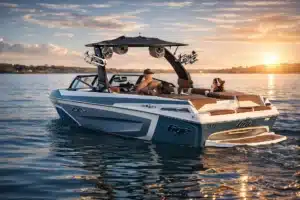
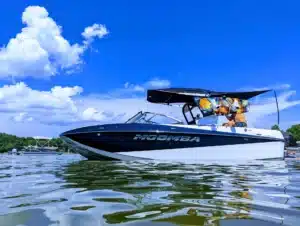
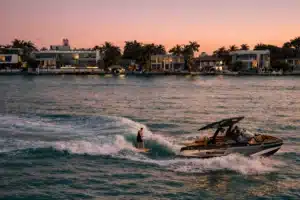
Colorado’s mountain lakes and reservoirs offer some of the most scenic settings in North America for water sports. Whether you’re interested in wakeboarding, jet skiing, wakesurfing, or waterskiing, the state’s high-altitude waters provide opportunities to try thrilling activities — and renting through Boatsetter lets you experience them without the commitment of ownership.
Key Takeaways
- Shadow Mountain Lake and Grand Lake form Colorado’s most popular water sports corridor, with calm morning conditions and protected orientations that minimize afternoon wind chop.
- Wakesurfing is the most beginner-friendly tow sport because you drop the rope once in the wave, making falls low-speed and forgiving compared to wakeboarding or waterskiing.
- Renting a boat through Boatsetter costs $150–$450 per day and eliminates the $60,000–$120,000 purchase price plus $3,000–$6,000 annual maintenance that ownership requires.
- Colorado law requires a second observer on board when towing riders and mandates Coast Guard-approved life jackets for all passengers, with stricter rules for children under 13.
- Book early morning sessions (before 1 p.m.) on exposed reservoirs like Dillon to avoid afternoon wind and whitecaps that develop as the day heats up.
- High-altitude UV exposure at 8,000–9,000 feet is significantly more intense than sea level, requiring SPF 50+ sunscreen reapplied every 90 minutes and a wetsuit for water activities.
What water sports can you do in Colorado?
Colorado isn’t the first place that comes to mind when people think about water sports, but the state’s 300-plus reservoirs and natural lakes give you real options. The key is knowing which sport fits which body of water, because conditions vary significantly between a calm alpine lake at 8,000 feet and a Front Range reservoir with afternoon wind chop.
Tow sports — wakeboarding, waterskiing, and wakesurfing — require a dedicated tow boat and at least a half-mile of open, calm water. Colorado’s larger reservoirs handle this well. Jet skiing and personal watercraft riding need designated PWC zones, which not every lake permits. Stand-up paddleboarding and kayaking are the most accessible options statewide, available on virtually every body of water.
Here’s a quick breakdown of what’s available and what to expect from each:
| Water Sport | Skill Level | Best For | Typical Duration |
|---|---|---|---|
| Wakeboarding | Beginner–Intermediate | Groups, ages 10+ | 2–4 hours |
| Waterskiing | Beginner–Advanced | Classic tow sport, solo or pairs | 2–4 hours |
| Wakesurfing | Beginner–Intermediate | Families, relaxed pace | 2–4 hours |
| Jet skiing / PWC | Beginner | Solo or pairs, high energy | 1–3 hours |
| Stand-up paddleboarding | Beginner | Calm water, all ages | 1–3 hours |
| Tubing | All ages | Kids and families | 1–2 hours |
| Kayaking / Canoeing | Beginner | Scenic touring, quieter lakes | 2–6 hours |
Wakesurfing has grown quickly in Colorado over the past several years because it’s approachable — you ride a short board in the boat’s wake without a rope, so falls are soft and the learning curve is gentler than wakeboarding. Waterskiing is the classic Colorado lake activity and works well on any large reservoir with a proper tow boat. Wakeboarding sits between the two in terms of difficulty: more athletic than waterskiing for beginners, but extremely rewarding once you’re up and riding consistently.
Best Colorado lakes and reservoirs for water sports
Colorado has dozens of boatable lakes, but a handful stand out for tow sports and personal watercraft. These four offer the right combination of size, permitted activities, and boat access.
Shadow Mountain Lake
Shadow Mountain Lake sits at 8,367 feet in Grand County and connects directly to Grand Lake via a short channel, giving you access to roughly 600 surface acres of combined water. It’s one of the best spots in the state for wakeboarding Colorado enthusiasts because the lake’s orientation provides protection from the prevailing afternoon wind. Motorized boats are permitted, and the lake sees consistent use from tow sport riders through the summer season. The area around Grand County has more recreational water than any other region in Colorado, which makes it a natural hub for water sports.
Dillon Reservoir
Dillon Reservoir is the largest body of water in Summit County at about 3,300 surface acres, sitting at 9,017 feet — one of the highest major reservoirs in the country. Motorized boating is permitted, and the lake is large enough to support waterskiing Colorado outings with room to spare. The trade-off is afternoon wind: Dillon is exposed and can develop significant chop by early afternoon in summer. Early morning sessions (launch by 8 a.m.) give you glassy conditions. Dillon Reservoir activities include sailing, kayaking, and fishing in addition to tow sports, and the surrounding Dillon Marina offers boat launches and rentals.
New to boating? Find captained charters near you - no experience or license needed.
Browse ChartersHorsetooth Reservoir
Horsetooth Reservoir, just west of Fort Collins, is the most accessible Front Range option for tow sports. At roughly 1,900 surface acres, it’s large enough for wakeboarding and waterskiing, and it sits at a lower elevation (5,430 feet) than the Summit County lakes, which means warmer water temperatures and a longer comfortable season. Personal watercraft are permitted in designated zones, making it one of the few Colorado lakes where jet skiing is explicitly allowed (Larimer County). The reservoir is managed by Larimer County, and boat ramps are available at multiple access points.
Grand Lake
Grand Lake is Colorado’s largest natural lake and the western gateway to Rocky Mountain National Park. At about 507 surface acres and 8,369 feet elevation, it’s smaller than Dillon but offers exceptional scenery and calmer morning conditions. Motorized boating is permitted, and the Grand Lake area supports wakesurfing lakes Colorado visitors consistently through July and August. The town of Grand Lake has marina services, making it easy to launch a rented boat without hauling your own trailer across the mountains. Grand Lake and Shadow Mountain Lake together form the most popular water sports corridor in the Colorado Rockies.
For a broader look at boating lakes in Colorado beyond these four, there are additional reservoirs across the Front Range and Western Slope worth exploring.
Renting boats on Boatsetter for Colorado water sports
Buying a tow boat in Colorado makes financial sense only if you’re on the water 20-plus days a year. A new wake boat runs $60,000–$120,000, and annual storage, insurance, and maintenance adds another $3,000–6,000. Renting through Boatsetter eliminates all of that — you pay for the days you actually use the boat, and the owner handles everything else.
The platform lists boats from private owners, which means you’re often renting from someone who uses their boat regularly and knows the local lake. That local knowledge is worth as much as the boat itself: which cove has calm morning water, where the underwater hazards are, and which ramp has the shortest wait on a Saturday.
| Water Sport | Ideal Boat Type | Rental Cost Range | What’s Included |
|---|---|---|---|
| Waterskiing | Ski boat or wake boat | $200–$400/day | Tow rope, skis, owner guidance |
| Wakesurfing | Wake boat with surf system | $250–$450/day | Surf board, owner guidance |
| Tubing / general fun | Pontoon or bowrider | $150–$300/day | Tube, tow rope, owner guidance |
| Paddleboarding / kayaking | Pontoon with gear | $100–$200/day | Boards or kayaks, paddles |
Boat rental costs vary by lake, season, and boat model. Summer weekends at Horsetooth or Grand Lake command the higher end of these ranges; weekday bookings in June or September often come in closer to the lower end.
When you browse boat rentals Colorado listings on Boatsetter, filter by boat type first. If you want to try wakeboarding or wakesurfing, search for “wake boat” specifically — a pontoon won’t generate the wake shape those sports require. For waterskiing, either a dedicated ski boat or a wake boat with ballast tanks emptied works well.
How to get started with your first water sport
Getting from “I want to try wakeboarding” to actually riding behind a boat takes a few steps. Here’s how to move through them efficiently.
Every boat on Boatsetter comes with $1M liability coverage. Rent with confidence.
Find a BoatChoose your water sport
- Wakesurfing is the most beginner-friendly tow sport. You start in the water, the boat pulls you up slowly, and once you’re in the wave you drop the rope. Falls are low-speed and forgiving.
- Waterskiing is the classic entry point for older beginners — the body position is intuitive, and getting up on two skis takes most people 3–5 attempts.
- Wakeboarding requires more core strength and coordination than waterskiing for the initial pop, but once you’re comfortable, wakeboarding basic tricks like surface 180s come quickly.
- Jet skiing is the lowest barrier to entry. Personal watercraft are easy to operate, and most beginners are comfortable within 20 minutes.
- Tubing is the right call for kids or groups that want fun without the learning curve. Any tow boat works, and no skill is required.
Book your rental
- Go to Boatsetter and search by location (try “Grand Lake, CO” or “Fort Collins, CO” for Horsetooth).
- Filter by boat type based on your chosen sport.
- Check the listing for what gear is included — most wake boats list the boards and ropes; confirm before booking.
- Message the owner with your group size and experience level. Owners appreciate the heads-up and can bring extra gear or adjust the session plan.
- Book with at least a week’s lead time on summer weekends — popular boats fill up fast in July and August.
Prepare and practice safely
- Watch 10–15 minutes of beginner tutorial video for your chosen sport the night before. Visualizing the correct body position makes a real difference on the water.
- Eat a light meal 1–2 hours before your session. A full stomach and choppy water don’t mix well.
- Arrive 15 minutes early to go over the boat’s controls and safety equipment with the owner.
- Start at low speed and work up gradually. Most beginners try to muscle their way up on the first attempt — relax your arms and let the boat do the work.
Safety requirements and gear for Colorado water sports
Colorado follows federal and state boating safety laws, and the requirements are stricter than many renters expect:
- Life jackets: Every person on board must have a Coast Guard-approved personal flotation device (PFD). Children under 13 must wear one at all times while the boat is underway.
- Boater education: Colorado requires anyone born on or after January 1, 1994 to complete a state-approved boater safety course before operating a motorized boat.
- PWC age restrictions: Operators of personal watercraft must be at least 16 years old in Colorado.
- Tow sport observer: When towing a skier, wakeboarder, or tuber, Colorado law requires a second person on board to act as an observer — the driver cannot watch the rider alone.
- No-wake zones: Many Colorado reservoirs have designated no-wake areas near boat ramps and shorelines. Violating these zones carries fines and can get you removed from the water.
High altitude adds a few considerations you won’t find in most boating guides. At 8,000–9,000 feet, UV exposure is significantly more intense than at sea level — apply SPF 50+ sunscreen and reapply every 90 minutes. Dehydration happens faster at altitude, so drink water consistently throughout your session. Cold water is also a factor: even in July, Colorado reservoir temperatures rarely exceed 65–68°F, so a wetsuit or neoprene shorts are worth bringing if you plan to spend time in the water learning a new sport.
Best seasons and weather conditions for water sports
The Colorado water sports season runs roughly from late May through September, with peak conditions in July and August. Water temperatures at lower-elevation reservoirs like Horsetooth reach their warmest point (60–68°F) in mid-summer, while high-altitude lakes like Dillon stay cooler (50–60°F) even at peak season.
June is an underrated month. Crowds are lighter than July, water levels are high from snowmelt, and morning conditions on most lakes are glassy. The trade-off is that water temperatures are colder — 50–58°F at altitude — so a wetsuit is more than a comfort item.
July and August bring the warmest water but also the most boat traffic and afternoon wind. On exposed reservoirs like Dillon, afternoon whitecaps can make tow sports uncomfortable by 1 p.m. The solution is simple: book an early morning session (8–11 a.m.) and wrap up before the wind builds.
September is excellent for experienced riders who don’t mind cooler water. Crowds thin out significantly after Labor Day, and the fall foliage around Colorado’s mountain lakes makes for some of the most scenic sessions you’ll find anywhere. Water temperatures drop back to the 50s at altitude, so a full wetsuit makes sense.
Spring (April–May) is generally too cold for most water sports at elevation, though Horsetooth Reservoir at 5,430 feet becomes usable in late April for riders willing to wear a wetsuit. Winter use of Colorado’s motorized lakes is extremely limited — most marinas close by mid-October.
Boatsetter empowers people to explore with confidence by showing them a world of possibility on the water. Rent a boat, list your boat, or become a Boatsetter captain today.
Frequently Asked Questions
What are the best lakes for water sports in Colorado?
Shadow Mountain Lake and Grand Lake form Colorado's premier water sports corridor, offering protected morning conditions and calm water ideal for wakeboarding and wakesurfing. Dillon Reservoir is the largest option at 3,300 acres but requires early morning sessions to avoid afternoon wind. Horsetooth Reservoir near Fort Collins is the most accessible Front Range choice and the only major lake where jet skiing is explicitly permitted.
Can you rent boats for wakeboarding in Colorado?
Yes. Boatsetter lists wake boats available for rent across Colorado's major lakes, with daily rates ranging from $250–$450 depending on the lake, season, and boat model. Most rentals include the wake board, tow rope, and owner guidance. Book at least a week in advance during summer weekends, as popular boats fill quickly in July and August.
Which Colorado lakes allow jet skiing?
Horsetooth Reservoir near Fort Collins is the most accessible Colorado lake with designated personal watercraft zones explicitly allowing jet skiing. Most other Colorado reservoirs restrict PWC use or prohibit it entirely. Always check the specific lake's regulations with the managing county or agency before booking a jet ski rental.
What is the most beginner-friendly water sport in Colorado?
Wakesurfing is the easiest tow sport to learn because you drop the rope once in the boat's wake, making falls low-speed and forgiving. Jet skiing ranks even lower on the learning curve — most beginners are comfortable within 20 minutes. Tubing requires no skill at all and works well for kids and groups seeking fun without a learning commitment.
Your perfect day on the water is a few clicks away. Browse boats near you.
Find a Boat