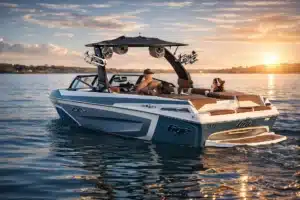
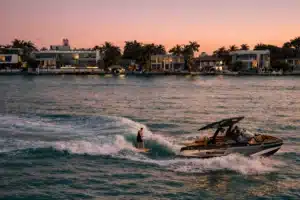
Lake Tahoe’s crystal-clear waters and reliable summer conditions make it one of the best destinations for wakesurfing and wakeboarding in North America. Whether you’re a beginner picking up a board for the first time or an experienced rider looking for new terrain, this guide covers everything you need to know — from legal requirements and rental options to the lake’s best spots and seasonal timing.
Key Takeaways
- Wakesurfing requires dropping the rope and riding the boat’s wake at 10–15 mph, while wakeboarding keeps you attached via bindings at 18–24 mph for aerial tricks.
- Both California and Nevada require a boater safety card if you were born after 1966 (CA) or 1983 (NV), and all boats entering Lake Tahoe must pass an aquatic invasive species inspection.
- The best riding window is 7–11 a.m. when water is glassy; afternoon southwest winds chop the surface by 1–2 p.m., making early mornings essential for quality sessions.
- Wakesurfing demands a ballast-equipped boat to create a surfable wake, while wakeboarding works on any tower-equipped tow boat, so verify ballast specs before booking.
- Lake Tahoe’s water peaks at 65–68°F in August, making a 3/2mm wetsuit mandatory year-round, and riders must stay at least 8 feet from the transom to avoid carbon monoxide exposure.
Wakesurfing vs. wakeboarding: What’s the difference?
Both sports involve being pulled behind a boat, but the experience on the water is quite different. Wakeboarding keeps you attached to the rope at all times via bindings on a shorter, twin-tip board. The boat runs at 18–24 mph, and the rope stays taut so you can generate speed for aerial tricks. Wakesurfing, by contrast, uses a longer, thicker board with no bindings. You start with a rope, get up to speed at 10–15 mph, then drop the rope and ride the boat’s wake like a wave — indefinitely, as long as you stay in the sweet spot behind the hull.
Neither sport is objectively harder, but they reward different skills. Wakeboarding has a steeper initial learning curve because you’re fighting against a taut rope. Wakesurfing gets you up and riding more quickly, but mastering ropeless tricks takes real time.
| Aspect | Wakeboarding | Wakesurfing |
|---|---|---|
| Boat speed | 18–24 mph | 10–15 mph |
| Equipment | Twin-tip board, bindings, handle | Wakesurf board (no bindings), short rope |
| Rope use | Always attached | Drop rope once riding |
| Skill entry point | Moderate | Lower |
| Trick ceiling | Very high (aerial, inverted) | High (shuvits, aerials, spins) |
| Ideal boat type | Any tower-equipped tow boat | Ballast-equipped surf-specific boat |
| Passenger safety | All sides of boat | Rider stays on wake side only |
One important safety note on wakesurfing: riders must stay on the same side as the wake — typically the port or starboard side designated by the driver. Because the rider is close to the boat, exhaust exposure is a real concern (USCG).
Legal requirements and boat setup at Lake Tahoe
Lake Tahoe straddles the California-Nevada border, so the rules depend on which side you launch from — though both states have largely aligned their boating regulations.
Do you need a boating license?
California: Anyone born on or after January 1, 1966 must carry a California Boater Card to operate a motorized vessel. The card requires completing an approved safety course.
Nevada: Anyone born on or after January 1, 1983 must complete an approved boating safety course before operating a motorized vessel (Nevada NDOW).
In both states, operating a boat for hire (with paying passengers) requires a USCG Operator of Uninspected Passenger Vessel (OUPV) license. Renting a boat for personal use and operating it yourself does not require a commercial license, but you still need the state safety card if the birth-year threshold applies to you.
Lake Tahoe also falls under the Tahoe Regional Planning Agency (TRPA), which enforces additional environmental regulations — including an aquatic invasive species inspection requirement for all boats entering the lake. Every vessel must pass an inspection before launching (TRPA).
New to boating? Find captained charters near you - no experience or license needed.
Browse ChartersRequired boat equipment and tower specifications
For wakeboarding and wakesurfing, your boat needs more than just a motor. Here’s what to verify before you book or launch:
- Wakeboard tower or pylon: Towers mount above the hull and raise the tow point, giving riders more upward rope angle and better air time. A pylon works for basic wakeboarding but limits trick height.
- Ballast system: Wakesurfing requires a larger, more defined wake. Ballast bags or built-in tanks add weight to the boat, pushing it lower in the water and creating a surfable wave. Without ballast, the wake is too small to ride ropeless.
- Coast Guard-required safety equipment: Throwable flotation device (Type IV), fire extinguisher, navigation lights, and a sound-producing device are federally required on all recreational boats (USCG).
- Observer or mirror: California and Nevada both require a spotter or wide-angle mirror when towing a rider. The driver cannot watch the water ahead and the rider simultaneously without one.
- Properly fitted PFDs: Every person on board needs a Coast Guard-approved life jacket. Riders must wear one while being towed.
Best locations and seasons for tow sports
Lake Tahoe covers 191 square miles at 6,225 feet of elevation, which means conditions vary significantly by location and time of year. The lake sits in a high-altitude basin, so water temperatures stay cold even in summer — surface temps peak around 65–68°F in August (UC Davis TERC).
Wind is the biggest variable. Afternoon winds typically build from the southwest, chopping up the surface by 1–2 p.m. The best riding window is 7–11 a.m., when the water is glassy and the air is still.
| Area | Best for | Launch access | Typical conditions |
|---|---|---|---|
| South Lake Tahoe (El Dorado Beach area) | Wakeboarding, beginner wakesurfing | Public ramp at Ski Run Marina | Calm mornings; afternoon chop from SW winds |
| Zephyr Cove (Nevada side) | Wakesurfing, intermediate riders | Full-service marina with rentals | Protected cove, consistently smooth |
| Homewood / West Shore | Advanced wakeboarding | Homewood Marina public ramp | Deeper water, less boat traffic mid-week |
| Tahoe City / North Shore | All skill levels | Tahoe City Marina ramp | Moderate traffic; good early-morning glass |
| Emerald Bay (approach only) | Scenic towing corridor | No launch inside bay | Restricted area — no wake sports inside the bay |
Note: Emerald Bay is a protected state park. Motorized water sports are not permitted inside the bay itself, but the open water just outside the entrance is legal and relatively calm (California State Parks).
Seasonal timing: June through September is the prime window. July and August offer the warmest water and longest days. Early June can still see snowmelt runoff keeping water temperatures in the low 50s°F, which demands a wetsuit. September is an underrated month — crowds thin out, water holds summer warmth, and wind patterns stay predictable.
Renting a boat for wakesurfing and wakeboarding
Buying a purpose-built surf boat — a Malibu, Mastercraft, or Nautique — costs $60,000 to over $150,000 new. Renting is the obvious move for most people, and Lake Tahoe has solid options through peer-to-peer platforms and local marinas.
On Boatsetter, you can filter specifically for boats with wakeboard towers and search within the Lake Tahoe area.
What to look for when booking:
Every boat on Boatsetter comes with $1M liability coverage. Rent with confidence.
Find a Boat- Ballast system listed in the specs: Essential for wakesurfing. If the listing doesn’t mention ballast bags or a factory surf system, ask the owner directly.
- Tower height and brand: A taller tower (42–48 inches above the gunwale) gives better rope angle. Brands like Aerial, Samson, and OEM towers from Malibu or Mastercraft are reliable.
- Owner experience with tow sports: Boatsetter owners often have direct experience with the sport and can serve as de facto instructors. A first-time driver pulling a wakeboarder is a safety risk — the owner knowing how to drive a clean line matters.
- Included equipment: Some listings include boards, bindings, vests, and ropes. Others are boat-only. Confirm before you book so you’re not scrambling for gear at the marina.
- Captain option: If nobody in your group has experience driving a tow boat, book with a captain. A captained charter removes the licensing concern and puts an experienced driver behind the wheel.
Lake Tahoe boat rentals are available across both the California and Nevada shores. South Lake Tahoe boat rentals tend to book up fastest in July and August, so reserve at least two to three weeks out.
Getting started: Lessons and progression
Both sports have a short but real learning curve. Most healthy adults can get up on a wakeboard in 3–5 attempts. Wakesurfing is typically faster — many beginners drop the rope within their first session.
Finding qualified instructors
Several operators around Lake Tahoe offer structured water sports instruction, including Action Water Sports at Zephyr Cove and Tahoe Watersports on the South Shore. Look for instructors with certifications from USA Water Ski & Wake Sports (AWSA or WWSF credentials) (USA Water Ski & Wake Sports).
If you’re booking through Boatsetter, ask the owner directly whether they provide instruction or know certified coaches nearby. Many experienced owners are happy to give a 15-minute on-water orientation, which can replace a formal lesson for riders with some board sport background.
What to bring and wear
- Wetsuit (3/2mm minimum): Water temperature at Tahoe rarely exceeds 68°F, even in August. A thin wetsuit is not optional — it’s comfort and safety.
- Water shoes or neoprene boots: Protect your feet on the boat deck and during water entries.
- Helmet (strongly recommended for beginners): Not legally required, but a hard fall at 20 mph onto flat water is a real impact.
- Sunscreen (reef-safe): TRPA guidelines encourage reef-safe formulas to protect the lake’s water quality.
- Towel and change of clothes: You will get wet, repeatedly.
Safety and water conditions
Lake Tahoe is 1,645 feet deep at its maximum. Cold water incapacitation is a genuine risk if you fall and can’t get back to the boat quickly. Keep these practices non-negotiable:
- Always wear a PFD while being towed. This isn’t optional under California or Nevada law.
- Use a spotter. The driver watches the water ahead; the spotter watches the rider. Communicate with hand signals before the run starts.
- Know the hand signals. Thumb up (faster), thumb down (slower), flat hand (stop/cut engine), hands on head (I’m okay after a fall).
- Stay clear of other boats. Tahoe is busy in summer. Give other vessels at least 200 feet of clearance when running a rider.
- Check weather before launching. Afternoon thunderstorms are not uncommon in July and August. If you see anvil-shaped clouds building over the Sierra, head in.
- Respect the altitude. At 6,225 feet, sun exposure is more intense and dehydration happens faster than at sea level. Drink water before you feel thirsty.
- Never wakesurf near the exhaust. Carbon monoxide from the engine exhaust can accumulate near the stern. Riders should never be within 8 feet of the transom while the engine is running (USCG).
Lake Tahoe’s water is famously clear — visibility to 60–70 feet is common — but that clarity can make depth deceptive near the shoreline. Stick to open water and give yourself at least 6 feet of depth clearance below the boat’s hull when towing.
Plan your Lake Tahoe wake sports trip
Book your boat rental at least two to three weeks out for summer weekends — Lake Tahoe boat activities fill up fast from late June through Labor Day. Aim for a morning start time, pack a wetsuit regardless of the forecast, and confirm your boat has ballast if wakesurfing is on the agenda.
Lake Tahoe rewards the prepared visitor. The same lake where you spend a morning wakeboarding can take you to a waterfront restaurant for lunch or a snorkeling spot in the afternoon — the water is that clear and that inviting.

Boatsetter empowers people to explore with confidence by showing them a world of possibility on the water. Rent a boat, list your boat, or become a Boatsetter captain today.
Frequently Asked Questions
What is the difference between wakesurfing and wakeboarding?
Wakeboarding keeps you attached to the rope via bindings at 18–24 mph, enabling aerial tricks. Wakesurfing uses a longer board with no bindings — you drop the rope at 10–15 mph and ride the boat's wake like a wave. Wakesurfing has a lower entry barrier, while wakeboarding offers higher trick potential.
When is the best time to go wakesurfing at Lake Tahoe?
Early mornings between 7–11 a.m. offer glassy water conditions. Afternoon southwest winds chop the surface by 1–2 p.m. June through September is the prime season, with July and August providing the warmest water (65–68°F). September is underrated — crowds thin and conditions stay predictable.
Do I need a license to operate a wakeboard boat at Lake Tahoe?
If you were born after January 1, 1966 (California) or January 1, 1983 (Nevada), you must carry a boater safety card. Operating a boat for hire requires a USCG Operator of Uninspected Passenger Vessel license, but renting for personal use only requires the state safety card.
Can beginners take wakesurfing lessons at Lake Tahoe?
Yes. Action Water Sports at Zephyr Cove and Tahoe Watersports on the South Shore offer structured instruction. Most beginners drop the rope within their first session. Many Boatsetter boat owners also provide on-water orientation, and instructors should hold USA Water Ski & Wake Sports certifications.
Your perfect day on the water is a few clicks away. Browse boats near you.
Find a Boat