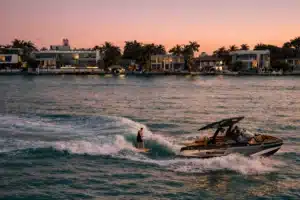
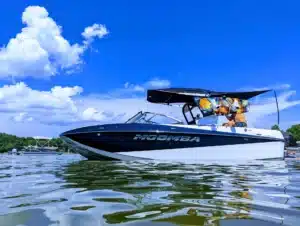
Texas has some of the most accessible and consistent wakeboarding conditions in the country — from the calm morning waters of Lake Travis near Austin to the year-round riding season across the state. Whether you’re a beginner looking for your first lesson or an experienced rider chasing the next challenge, these lakes offer the infrastructure, amenities, and water quality to make your day on the board unforgettable.
Key Takeaways
- Texas water temperatures stay above 65°F from April through November, with morning winds remaining glassy across central lakes, making year-round wakeboarding possible without waiting for summer.
- Lake Travis’s 63-mile length and 200+ foot depths create clean, unimpeded wakes and protected coves even on busy weekends, with water clarity of 10–15 feet ideal for learning.
- Early summer (May through mid-July) offers the best conditions on major lakes—75–80°F water, manageable wind before 10 a.m., and lighter boat traffic than August peaks.
- Beginner wakeboard lessons typically cost $150–300 for 2–3 hours including boat, fuel, and instruction, with most riders getting up on the board within 3–5 attempts in their first session.
- Wakesurfing requires an inboard or V-drive engine and is lower-impact than wakeboarding, making it the gentler entry point for new riders despite needing a ballast-equipped boat.
Why Texas is a year-round wakeboarding destination
Most states have a hard ceiling on their water sports season. Texas largely doesn’t. Water temperatures on central and south Texas lakes stay above 65°F from roughly April through November, and dedicated riders push that window even further with wetsuits in the cooler months. The Gulf of Mexico’s moderating influence keeps winters mild across most of the state, and the sheer number of large reservoirs — Texas has more than 200 major lakes — means you’re rarely more than an hour from rideable water.
Wind patterns matter for wakeboarding because chop is the enemy of clean wake. Across most of central Texas, mornings are glassy. The prevailing southerly winds that build through the afternoon are predictable enough that local riders structure their entire day around an early launch: on the water by 7 a.m., off by noon before the chop builds. That rhythm is so consistent that most wake boat rental operators on Lake Travis and Lake Lewisville set their earliest booking windows at 6:30 or 7 a.m.
The infrastructure has grown to match the demand. Texas has a dense network of marine dealers, wake-specific boat clubs, cable parks, and certified wakeboard schools — particularly in the Austin and Dallas-Fort Worth corridors.
Lake Travis: Austin’s premier wakeboarding lake
Lake Travis is 63 miles long, reaches depths of over 200 feet in some sections, and sits just 25 miles west of downtown Austin. Those numbers matter for wakeboarding: deep water means a clean, unimpeded wake, and the lake’s length means you can find a quiet cove even on a busy summer weekend. It’s consistently cited as the top Austin-area water sports destination, and the surrounding community of marinas, rental operators, and instructors has built up around that reputation.
Why Lake Travis stands out
The lake’s topography does most of the work. Canyon walls on the western sections block afternoon wind longer than open-water lakes, giving riders an extended window of smooth conditions. Water clarity is excellent compared to the murkier, shallower lakes in north Texas — visibility of 10–15 feet is common, which matters when you’re learning falls and need to see what’s below you. The lake also sits within the Lower Colorado River Authority’s jurisdiction, which maintains water quality standards and manages recreational access (LCRA).
Best times and conditions
Early summer — May through mid-July — is the sweet spot. Water temperatures hit 75–80°F, wind is manageable before 10 a.m., and boat traffic, while present, hasn’t reached the peak August crush. Labor Day weekend and the Fourth of July see the heaviest congestion; if you can avoid those specific dates, you’ll have a noticeably better experience. Spring (March–April) offers the calmest water of the year, though water temperatures in the low 60s make a wetsuit worth considering.
Where to rent and launch
Multiple full-service marinas operate on Lake Travis, concentrated around the Lago Vista, Lakeway, and Volente areas. Several offer wake boat rentals specifically — Mastercraft and Nautique models with ballast systems designed for surfing and wakeboarding. Sunrise launch times are standard; most operators require a credit card hold for fuel and any damage above the included coverage.
| Factor | Details |
|---|---|
| Lake length | 63 miles |
| Max depth | 200+ feet |
| Water temp (peak season) | 75–80°F (May–August) |
| Best riding window | 6:30–11 a.m. before wind builds |
| Primary access points | Lago Vista, Lakeway, Volente |
| Water clarity | 10–15 ft visibility typical |
| Jurisdiction | Lower Colorado River Authority |
New to boating? Find captained charters near you - no experience or license needed.
Browse ChartersLake Lewisville and the Dallas-Fort Worth region
Dallas-Fort Worth riders don’t have to drive to Austin. The DFW metroplex sits within 45 minutes of several solid wakeboarding lakes, with Lake Lewisville being the most popular. At roughly 23,000 acres, Lewisville has the surface area to absorb heavy boat traffic without every cove turning into a washing machine — though weekend mornings still reward early arrivals.
Lake Lewisville’s shallower average depth (compared to Travis) means the wake behaves differently. It’s a bit softer and wider, which some riders actually prefer for learning new tricks. The lake has multiple public boat ramps, a dedicated ski and wake zone, and several rental operators along the eastern and southern shores. The Army Corps of Engineers manages the lake and its surrounding parkland, maintaining public access points and enforcing no-wake zones near swim beaches (USACE Fort Worth District).
The DFW region also has cable wakeboarding — a shore-based system that pulls riders around a course without a boat — at a facility in the area, which is worth knowing if you’re a beginner who wants to practice technique before committing to a full boat rental.
| Lake | Distance from Dallas | Best for | Water conditions |
|---|---|---|---|
| Lake Lewisville | ~30 miles north | Wakeboarding, wakesurfing | Moderate chop by afternoon; flat mornings |
| Lake Grapevine | ~25 miles northwest | Beginners, families | Smaller, calmer; limited wake zones |
| Lake Ray Hubbard | ~15 miles east | Quick access from downtown | Open, windier; best in early morning |
| Lake Texoma | ~75 miles north | Experienced riders, longer runs | Large fetch; can get rough; excellent depth |
| Eagle Mountain Lake | ~20 miles northwest | Wakeboarding, tubing | Protected coves; popular with locals |
East Texas alternatives: Caddo Lake and Lake Fork
East Texas offers a different kind of wakeboarding experience — less crowded, more scenic, and better suited to riders who want the water largely to themselves.
Caddo Lake is the only naturally formed lake in Texas, and it looks unlike anything else in the state — Spanish moss, cypress trees, and tea-colored water from tannins in the vegetation. The open sections of the lake away from the bayou channels are calm and largely empty on weekday mornings. Note that navigation requires attention; the bayou network is not suitable for wake boats at speed (Texas Parks & Wildlife).
Lake Fork is better known for bass fishing but its 27,000 acres of open water and limited wake boat traffic make it an underrated option for wakeboarding. The Sabine River Authority manages Lake Fork, and the lake has multiple public ramps and marina facilities in the Quitman area. Water clarity is decent by East Texas standards, and the lake’s size means you can find a long, open stretch without competing for space.
A few practical notes for East Texas riding:
- Fuel and marine services are more spread out than around Austin or DFW; top off before you launch.
- Cell coverage can be spotty on the water; download offline maps before you go.
- Weekdays are dramatically less crowded than weekends.
- Water temperatures in East Texas lakes tend to run slightly warmer in summer due to shallower depths and less elevation.
Getting started: lessons, rentals, and booking a charter
Finding a qualified instructor
The fastest way to learn wakeboarding is with someone in the boat who’s coached before. A good instructor manages boat speed (beginners typically start at 18–20 mph on a wakeboard), positions the rope correctly, and knows how to read a rider’s posture to diagnose problems before they become habits. Look for instructors affiliated with the World Wake Association or USA Water Ski & Wake Sports — both organizations offer certification programs that set a baseline for coaching quality (USA Water Ski & Wake Sports).
Several Texas lakes have dedicated wakeboard schools operating from marinas, particularly on Lake Travis and Lake Lewisville. Beginner packages typically include the boat, fuel, equipment rental, and 2–3 hours of instruction for $150–300 depending on group size and operator. Private lessons run higher; group clinics bring the per-person cost down.
Every boat on Boatsetter comes with $1M liability coverage. Rent with confidence.
Find a BoatWhat to expect on your first session
The first 20 minutes will be in the water, not on the board. Your instructor will walk you through the deep-water start — board perpendicular to the boat, knees tucked, letting the boat pull you up rather than trying to stand yourself. Most beginners get up within 3–5 attempts. Once you’re riding, the focus shifts to edge control and keeping your weight centered over the board.
Wear a properly fitted life jacket — Coast Guard-approved Type III is standard for towed water sports — and consider a helmet for your first few sessions if you’re nervous about head impacts during falls (BoatUS Foundation).
Booking a wake boat rental
Renting through a platform like Boatsetter connects you directly with local boat owners who know their lake. Many owners on Texas lakes have wake-specific boats — Mastercraft X-series, Nautique G-series, Malibu Wakesetter models — with factory ballast systems and surf tabs already dialed in. When you browse wake boat rentals in Texas, filter for boats listed with wakeboarding or wakesurfing in the description; owners who specify those activities typically have the right equipment and will share local knowledge about conditions and launch timing.
Every rental through Boatsetter includes $1M liability coverage, which matters when you’re learning a new sport with inherent fall risk.
Wakeboarding vs. wakesurfing: which is right for you
These two sports share a boat but feel completely different to ride. Wakeboarding uses a rope and board bindings; wakesurfing uses a shorter, fin-heavy board and — once you’re up — you drop the rope and ride the boat’s wake indefinitely. Wakesurfing is generally easier on the body, lower impact on falls, and requires slower boat speeds (10–12 mph vs. 20–23 mph for wakeboarding). It’s also why wake-specific boats with ballast systems exist: the heavier the boat sits in the water, the larger and steeper the wave.
| Aspect | Wakeboarding | Wakesurfing |
|---|---|---|
| Rope | Always attached | Drop it once you’re up |
| Board | Bindings, twin-tip | No bindings, directional |
| Speed | 18–24 mph | 10–12 mph |
| Wake size needed | Moderate | Large (requires ballast) |
| Learning curve | Moderate | Slightly easier for beginners |
| Impact on falls | Higher | Lower |
| Best Texas lakes | Lake Travis, Lake Texoma | Lake Travis, Lake Lewisville |
| Minimum boat type | Any inboard or V-drive | Wake-specific boat required |
One practical note: wakesurfing requires an inboard or V-drive engine — never a sterndrive or outboard — because you’re riding close to the back of the boat. When booking a rental for wakesurfing specifically, confirm the engine configuration before you pay.
Texas lakes are well-suited to both disciplines. If you’re choosing for the first time, wakesurfing is the gentler entry point. If you want the full aerial progression — grabs, inverts, and eventually cable park tricks — wakeboarding is the path.

Boatsetter empowers people to explore with confidence by showing them a world of possibility on the water. Rent a boat, list your boat, or become a Boatsetter captain today.
Frequently Asked Questions
What is the best lake for wakeboarding in Texas?
Lake Travis near Austin is consistently ranked as Texas's top wakeboarding destination. Its 63-mile length, 200+ foot depths, and water clarity of 10–15 feet create clean wakes ideal for all skill levels. The lake's canyon walls also block afternoon wind longer than open-water lakes, extending your riding window into late morning.
Can you wakeboard year-round in Texas?
Yes. Texas water temperatures stay above 65°F from April through November, and dedicated riders extend the season further with wetsuits in cooler months. The state's 200+ major lakes and consistent early-morning glassy conditions make year-round riding practical, though May through mid-July offers the best combination of water temperature (75–80°F) and manageable wind.
How much does wakeboarding cost in Texas?
Beginner wakeboard lessons typically cost $150–300 for 2–3 hours of instruction, including the boat, fuel, and equipment rental. Private lessons run higher, while group clinics bring the per-person cost down. Wake boat rentals on platforms like Boatsetter vary by boat model and location but generally range from $200–400 for a half-day.
Which Texas lakes have the calmest water for wakeboarding?
Lake Travis and Lake Lewisville both offer the calmest conditions during early morning hours (before 10 a.m.), when prevailing southerly winds haven't yet built chop. Lake Travis's canyon walls provide extended protection, while spring (March–April) offers the calmest water of the year across most central Texas lakes, though water temperatures are cooler.
Your perfect day on the water is a few clicks away. Browse boats near you.
Find a Boat