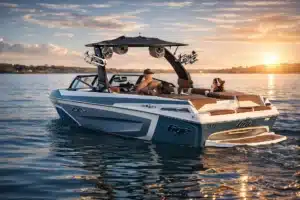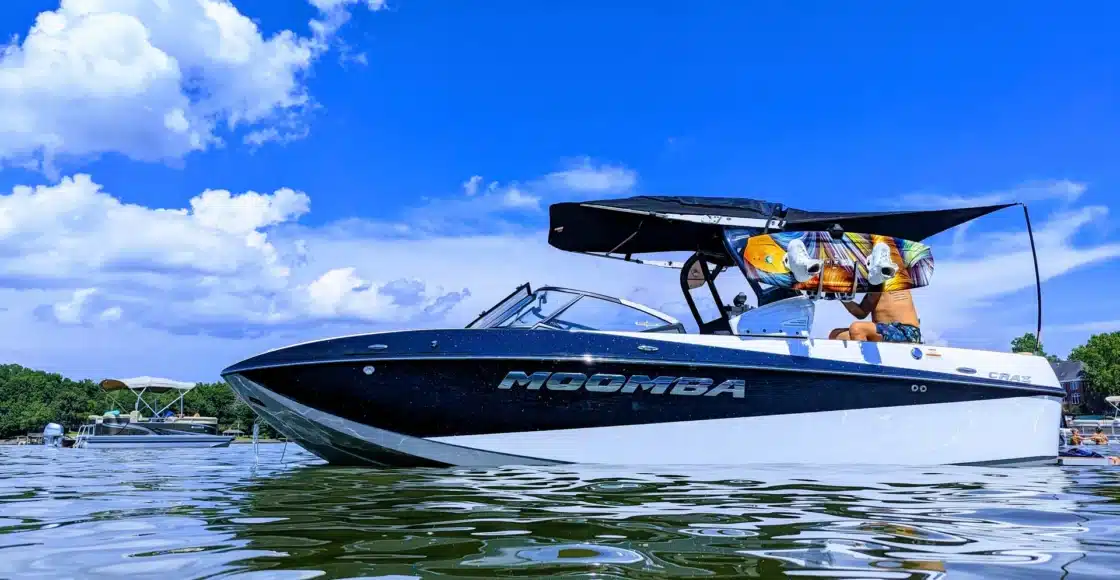
Lake Norman‘s wide, deep coves and steady summer traffic make it one of the best places in North Carolina to learn wake surfing. This guide covers where to ride, what it costs, and how to book a wake boat with a local captain who can teach you on the water.
Key Takeaways
- A half-day charter split among five or six people often costs just $60–$100 per person, making a group booking more economical than a single private lesson.
- Lake Norman’s main channel runs 60 to 110 feet deep, allowing wake boats to fill ballast tanks fully and throw a tall, surfable wave that shallower lakes can’t support.
- The best riding window is roughly 6 to 8 a.m. in midsummer — by late morning on a Saturday, accumulated boat traffic turns the open water too bumpy for clean surfing.
- Wake surfing is done at 10–12 mph with no rope after the initial pull, making falls far gentler than wakeboarding’s 18–24 mph wipeouts.
- Sherrills Ford coves on the west shore and the northern coves near Mooresville stay calmer and less crowded than the busier southern end near Cornelius.
- Booking a captained charter means the boating safety course requirement falls on the captain, not the rider, so visitors need no license or prior experience.
What makes Lake Norman great for wake surfing
Lake Norman is the largest man-made lake in North Carolina, covering roughly 32,000 acres with more than 500 miles of shoreline (Visit Lake Norman). That scale matters for wake sports. You need room to set a line, build a clean wake, and ride without crossing into boat traffic every thirty seconds. On a smaller lake, you run out of water fast. Here you don’t.
Depth is the other big advantage. Much of the main channel runs 60 to 110 feet deep, which means a wake boat can fill its ballast tanks fully and throw a tall, ramped-up wave without bottoming out (Best of Lake Norman). Shallow lakes force boats to ride light. Lake Norman lets a captain weight the boat properly for a surfable wake.
A few features make it especially beginner-friendly:
- Sheltered coves. The lake’s many fingers and side coves block wind, so the surface stays glassy even when the main body gets choppy.
- Early-morning calm. Before the weekend crowd launches, the water is mirror-flat — ideal for learning the pop-up and finding the sweet spot in the wake.
- Warm summer water. Surface temperatures sit in the low-to-mid 80s through July and August, so a fall isn’t a shock (WaterTemperature.net).
- Proximity to Charlotte. The lake sits about 30 minutes north of the city, so a morning session before work is genuinely doable.
The lake hosts a deep wakesports culture, too. Local outfitters run wake camps for kids, and you’ll see MasterCraft and other inboard wake boats threading the coves all summer. If you’re curious about everything else the lake offers, our broader guides to Lake Norman boating and water activities cover fishing, waterfront restaurants, and pontoon cruising.
Wake surfing vs. wakeboarding: which to try first
Both sports happen behind the same kind of boat, but they feel completely different. Wakeboarding is closer to snowboarding on water — you’re strapped to a board, holding a rope, riding fast, and you can launch off the wake for air. Wake surfing is closer to ocean surfing. After a short pull, you drop the rope entirely and ride the boat’s wave under your own balance.
For most first-timers, wake surfing is the gentler entry point. You ride at 10 to 12 mph instead of 18 to 24, you stay close to the boat, and a fall means a soft tumble into the wake rather than a high-speed faceplant.
| Feature | Wake surfing | Wakeboarding |
|---|---|---|
| Boat speed | 10–12 mph | 18–24 mph |
| Rope | Dropped after the pop-up | Held the whole ride |
| Board | Wider, finned, no bindings | Narrower, with foot bindings |
| Fall impact | Gentle, low speed | Faster, harder landings |
| Learning curve | Easier to stand and ride | Steeper for the first stand |
| Best for | Cruising, beginners, all ages | Air, tricks, faster pace |
If you can stand on a board and find your balance, wake surfing rewards you within a session or two. Wakeboarding takes longer to get comfortable but pays off if you want speed and tricks. A good captain can rig the boat for either, and many groups try both in a single outing — start surfing to warm up, then strap in for wakeboarding once everyone’s loose.
How to rent a wake boat with a captain
You don’t need to own a $90,000 inboard or know how to weight a ballast system to ride. On Boatsetter, you can book a wake-ready boat that comes with a captain who drives, sets the wake, and coaches you through it.
New to boating? Find captained charters near you - no experience or license needed.
Browse ChartersWhy book with a captain
Setting a clean surf wave is a skill. The captain dials in speed, ballast, and trim, then watches your stance and tells you where to shift your weight. Without that, beginners spend the whole session chasing a wave that never quite forms. A local captain also knows which coves are calm that morning and where the weekend traffic builds up.
With a captain aboard, you don’t need a boating license or any prior experience. The captain handles the legal and operational side, so you can focus entirely on riding. That’s the same model that makes captained charters so popular for first-timers across every kind of boating.
What a wake-ready boat needs
Not every boat throws a surfable wake. A proper wakesurf setup has three things: an inboard or V-drive engine (so there’s no propeller near the rider at the stern), ballast tanks or bags to weight the hull down, and ideally a surf system that shapes the wave to one side. MasterCraft, Malibu, Nautique, and similar inboards are the gold standard. A pontoon or a typical bowrider with an outboard won’t cut it for surfing, though pontoons are great for tubing and cruising.
When you browse listings, look for “wakesurf,” “wake boat,” or a named inboard brand in the description, and confirm the boat includes wakesurf boards and life jackets.
Booking on Boatsetter
Search wake boat rentals on Lake Norman, filter for captained listings, and read the description for the boat’s wake setup and what gear comes included. Message the owner or captain before you book to confirm your group size, the experience level of your riders, and whether they provide instruction. Most captains will happily tailor a session for total beginners or push experienced riders toward bigger waves and foiling.
What wake surfing on Lake Norman costs
Captained wake charters are priced by the hour or by the session, and the rate covers the boat, the captain, fuel, and usually the boards and life jackets. Prices climb with boat size and the caliber of the wake setup — a top-tier MasterCraft costs more than an older wake boat.
| Option | Typical price | What’s included |
|---|---|---|
| Hourly wake lesson | $120–150/hour | Captain, boat, boards, basic instruction |
| Half-day captained charter | $400–700 | 3–4 hours, captain, gear, multiple riders |
| Full-day charter | $800–1,400 | 6–8 hours, captain, gear, fuel |
| Group session (split cost) | $60–100/person | Shared half-day across 5–6 people |
The math works best with a group. A half-day charter split among five or six friends often lands around $60 to $100 a head, which is competitive with a single private lesson and gives everyone far more time on the water. Tipping the captain 15 to 20 percent is customary if they’ve coached you well and kept the day running smoothly. Always confirm what’s included before you book, since fuel and gear policies vary by listing.
Best spots and times to ride
Where you ride on Lake Norman depends on what kind of water you want and how busy the lake is. The southern end near Cornelius and the bridges sees the most traffic, especially on summer weekends. The northern and western reaches tend to stay quieter and flatter.
Every boat on Boatsetter comes with $1M liability coverage. Rent with confidence.
Find a Boat- Sherrills Ford coves (west shore): Known among local riders for calm, protected water and a relaxed pace. A favorite for surf sessions.
- Northern coves near Mooresville: Wide, deep, and less crowded than the south end, with good morning glass.
- Side fingers off the main channel: Almost any narrow cove blocks wind and chop. Captains will tuck into one when the main body kicks up.
- Avoid the bridges and marinas midday: Boat wakes pile up there, churning the surface into washing-machine chop that ruins a clean wave.
Timing matters as much as location. The best window is the first two hours after sunrise, roughly 6 to 8 a.m. in midsummer. The wind is calm, the lake is empty, and the surface is glass — exactly what you want for learning. By late morning on a Saturday, accumulated boat traffic turns the open water bumpy, and a rough surface makes both surfing and wakeboarding harder and less forgiving. Evening, in the hour before sunset, often calms down again and gives you a second clean window.
North Carolina requires anyone born on or after January 1, 1988 to complete a boating safety course before operating a motorboat or PWC, but with a captain aboard, that requirement falls on the captain, not you (NC Wildlife Resources Commission). It’s one more reason a captained charter is the easy path for visitors.
Getting to Lake Norman from Charlotte and beyond
Lake Norman sits just north of Charlotte along I-77, which makes it one of the most accessible big lakes in the state. Most captained charters launch from the Cornelius, Davidson, Mooresville, or Sherrills Ford areas, and your captain will give you a specific dock or ramp once you book.
| Starting point | Drive time | Nearest access area |
|---|---|---|
| Charlotte (uptown) | ~30 min | Cornelius / Exit 28 |
| Charlotte Douglas Airport | ~40 min | Cornelius / Exit 28 |
| Mooresville | ~10 min | Mooresville public ramps |
| Statesville | ~25 min | Sherrills Ford / west shore |
| Winston-Salem | ~1 hr | Mooresville / north end |
| Hickory | ~45 min | Sherrills Ford / Catawba side |
From uptown Charlotte, take I-77 north and exit around Exit 28 (Cornelius) or Exit 36 (Mooresville) depending on where your charter launches. The drive is straightforward outside of rush hour. If you’re flying in, Charlotte Douglas International is about 40 minutes from the southern coves. Riders coming from the Catawba side of the lake — sometimes listed as Lake Norman of Catawba — will find easy access near Sherrills Ford on the western shore.
Plan to arrive 15 minutes before your booking so the captain can fit life jackets, review hand signals, and get you on the water during that calm morning window. Parking is generally available at the marina or launch your captain designates, but confirm it when you book.
Book your Lake Norman wake session
The hardest part of wake surfing on Lake Norman isn’t the riding — it’s getting access to the right boat with someone who knows how to set the wave. A captained wake boat rental solves both in one booking. You show up, the captain dials in the wake, and you spend the morning learning to ride instead of fiddling with ballast.
No experience and no boating license are required when you book with a captain. Beginners get coached through the pop-up and their first ride; experienced riders can push into bigger waves, wakeboarding tricks, or even foiling. Browse wake boat rentals on Lake Norman, message a captain about your group and skill level, and lock in an early-morning slot for the cleanest water of the day.
Boatsetter empowers people to explore with confidence by showing them a world of possibility on the water. Rent a boat, list your boat, or become a Boatsetter captain today.
Frequently Asked Questions
How much does wake surfing cost on Lake Norman?
A captained wake charter on Lake Norman typically runs $120–150 per hour or $400–700 for a half-day session covering 3–4 hours, including the captain, boat, boards, and life jackets. Split among five or six people, a half-day often works out to $60–100 per person — competitive with a single private lesson and far more time on the water.
Do I need experience to wake surf on Lake Norman?
No prior experience is required when you book a captained charter. The captain handles the boat, dials in the wake, and coaches you through the pop-up and your first ride. Wake surfing is done at 10–12 mph with no rope after the initial pull, which makes falls gentle and the learning curve manageable within a session or two.
What are the best wake surfing spots on Lake Norman?
The Sherrills Ford coves on the west shore and the northern coves near Mooresville are favored by local riders for calm, protected water. The best time to ride is roughly 6–8 a.m., before weekend boat traffic churns the surface. The busier southern end near Cornelius and the bridges tends to get choppy by late morning.
What kind of boat do I need to wake surf on Lake Norman?
Wake surfing requires an inboard or V-drive boat — such as a MasterCraft, Malibu, or Nautique — equipped with ballast tanks and ideally a surf system to shape the wave. Outboard bowriders and pontoons do not work for wake surfing. When booking on Boatsetter, look for listings that specifically mention 'wakesurf' or a named inboard brand.
Your perfect day on the water is a few clicks away. Browse boats near you.
Find a Boat